
🎧 Listen to the Blog on the Tomorrow Corp Radio Broadcast:
Let’s start with something simple.
Food insecurity is not a food problem.
We have food. We have farmers. We have donors. We have volunteers.
What we have instead is a system problem—specifically, a centralization problem.
Right now, too much food relief is controlled by large, locked systems that are expensive, slow, and disconnected from local communities. And the result is waste, burnout, and sometimes even quiet abuse of trust.
Decentralization isn’t radical. It’s practical.
Small church teams—sometimes as few as 20 people—can make a massive impact today. With modern tools, especially AI, these teams can handle inventory, compliance, and reporting without hiring layers of staff. What used to require a full office can now be done with lean, transparent systems.
That means churches no longer have to choose between compassion and compliance. They can do both.
And when most of the work is done by volunteers, the economics change completely. A simple model—local distribution points and maybe one shared regional refrigeration truck—can replace massive overhead. Every dollar not spent on bureaucracy feeds someone.
Now let’s name something uncomfortable.
In many places, poor churches are being charged for food that was already donated. Food funded by taxpayers. Food subsidized by grants. Food meant for people who are struggling.
Meanwhile, some food-bank salaries are very high.
When the poor are asked to subsidize bureaucracy, something has gone wrong. Charity should never become transactional for those with the least.
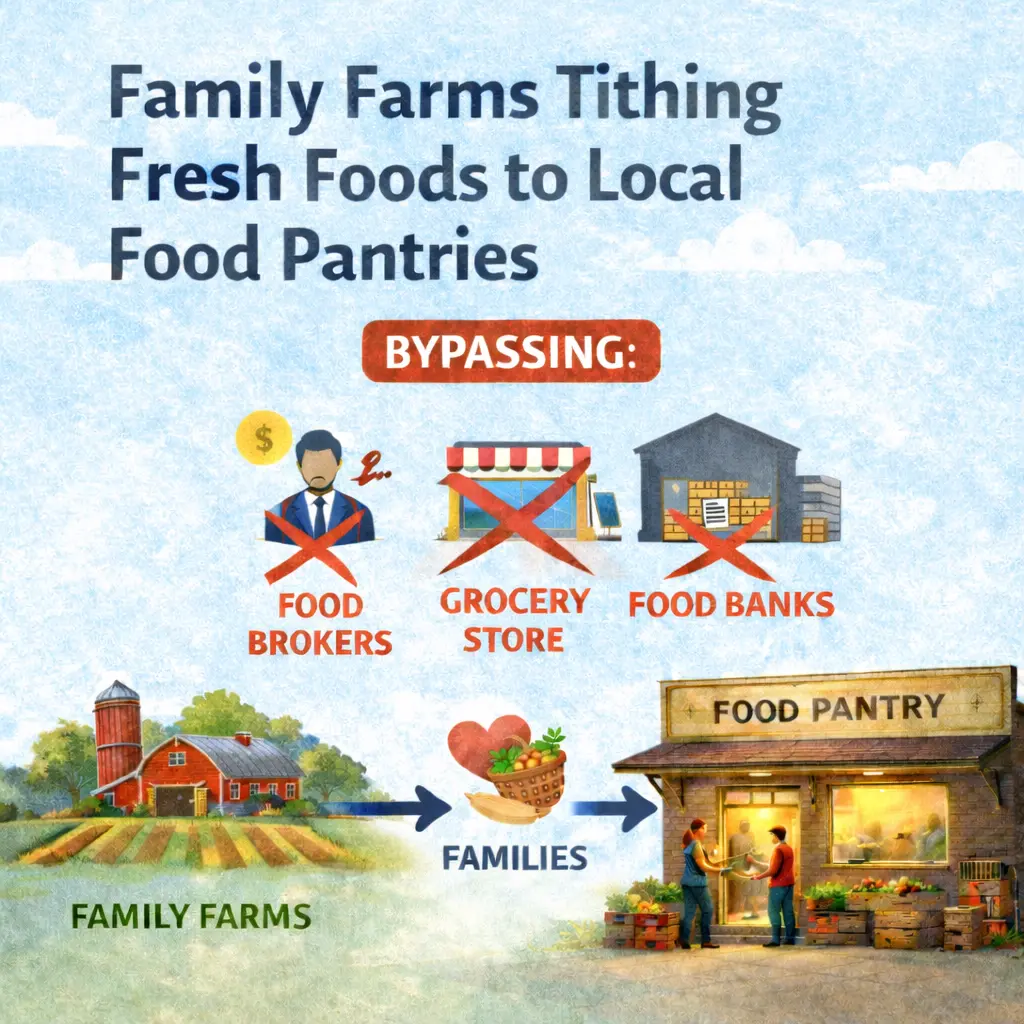
Another issue is consolidation. A few corporate middlemen now stand between farmers and communities. Local pantries are often discouraged from working directly with family farmers—but they shouldn’t be.
Many farmers want to donate surplus or sell at cost. Direct relationships reduce waste, cut transport costs, and keep food fresh. Decentralization doesn’t break the supply chain—it shortens it.
And finally, let’s talk about fraud.
Fraud flourishes in closed systems. In models that lock people out instead of inviting them in. In organizations that elevate a few highly paid “heroes” while real work happens quietly in the background.
From a biblical perspective, that’s a warning sign. Our treasures aren’t stored here. The true heroes are the ones you’ll never hear about—the volunteers, the farmers, the quiet servants.
Decentralization restores humility, accountability, and trust.
Food insecurity won’t be solved by bigger warehouses or higher salaries.
It will be solved by smaller teams, local relationships, and the courage to build better systems.
And the good news is—we already have everything we need to start.